The CJP Safety Standdown throughout the convention’s opening day included an examination of best practices for crosswind landings and checklist procedures, presented by NetJets’ Richard Meikle and Rob Switz.

Meikle (above), the fractional operator’s executive vice president of safety, explained how manufacturers conduct crosswind testing under Part 25. “Interestingly, they only do crosswind testing on dry runways,” he began. “Just contemplate that for just a second. There are also no contaminants on the airplane [but] they do use the worst CG and loading conditions.
“They [also] do no Vmc testing in crosswinds,” Meikle continued. “Pilots have described Vmc testing as some of the scariest stuff they do, so they try to find the calmest conditions they can.”
As for the difference between demonstrated crosswinds – those verified as safe for test pilots to land and take off in – and crosswind limitations, “you can tell by where it is in the AFM. If it’s demonstrated, it’s in the advisory section; if it’s limiting, it’s in the limitations section.”
That said, “you really shouldn’t consider there to be any difference between them,” Meikle emphasized. “You can technically exceed the demonstrated crosswind, but you shouldn’t because you’ve now become a test pilot, and the actual test pilots already said that’s the upper limit at which they were able to maintain control of the airplane.”
Pointing to two fatal accidents at Aspen (ASE) – one involving a landing Challenger 601, the second a Hawker 800 on takeoff – Meikle emphasized the problematic nature of ATC-reported “instantaneous winds” information that often does not present an accurate picture of actual gusting conditions.
“There is no FAA definition for instantaneous winds,” he added. “It’s a trap. Don’t use them.”
Ensuring Checklist Discipline
The importance of using checklists is drilled into the minds of pilots from their very first flight lesson; nevertheless, multiple accidents are found to have been caused, at least in part, by either improper checklist use, or not using them at all.
Every time you use a checklist, “you must be very intentional about what it is that you’re doing,” said Switz, vice-president of standards at NetJets. He added the history of checklists dates back to the October 30, 1935 takeoff accident of a Boeing Model 299 – forerunner to the B-17 bomber – found to have been caused by an unremoved control gust lock.
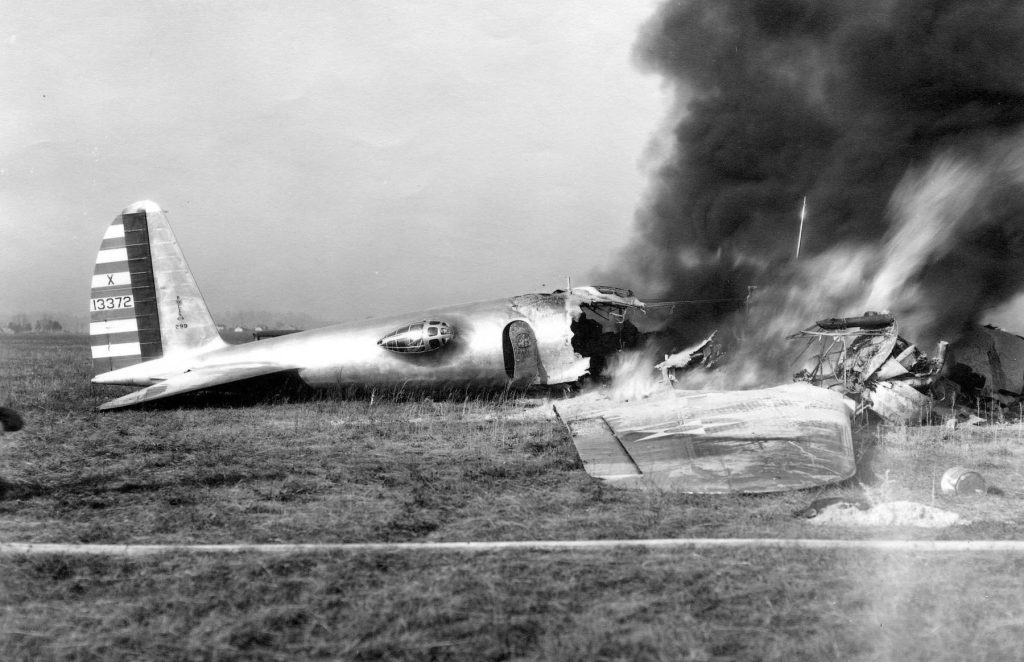
Following the accident, Boeing created a checklist “because of the complexity of the airplane,” he said. “Until then, [pilots] were doing it all by memory.”
Checklists may also evolve over time, as they’re “made to capture human error,” Switz said. “We improve these checklists all the time, and humans find better ways to make errors.”
Quick reference handbooks (QRH) are another valuable tool, particularly for emergency situations, but should not replace the full checklist for a given scenario.
Switz urged Citation pilots to keep checklists within easy access on the flight deck, and to verify completion of each task before moving onto the next. Single pilots may utilize solo variations of call-and-response checks to ensure they don’t miss any steps.
“Every checklist that you do is like story,” he added. “You have to open it, start the story, and you have to finish the story. And if you are able to do that, then you’ll accomplish everything.”