Incoming CJP Chair Stephen Elop presented the popular ‘Owner to Owner’ session on the final day of CJP 2025, with this year’s focus on handling the unexpected inflight and keeping your cool so that an abnormal situation doesn’t escalate to something even worse.
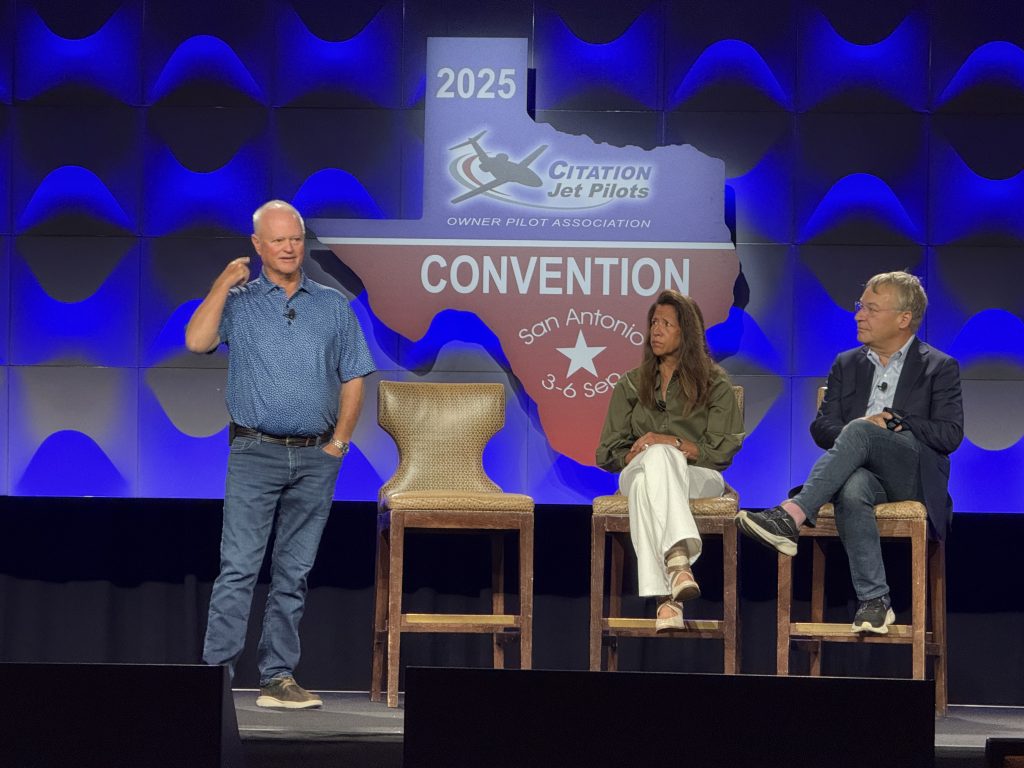
Kirk and Bonnie Samuelson led off the discussion recounting their experience with an engine-out on takeoff from Hayward, CA in August. While the event itself was sudden, Kirk noted their CJ3’s right engine was “talking to us for 18 months.
“It had been telling us, ‘pay attention to me,” he continued. “I noticed about 18 months prior that the right engine ITT started to be a little bit higher than the left.” Despite numerous consultations and checkouts, however, the engine had been repeatedly determined to be operating within normal specs.
That clearly wasn’t the case as readings shot into the red on climbout from HWD, leading Kirk to shut the engine down. Fortunately, the Samuelsons had briefed exactly what to do in the event of an emergency on takeoff, including diverting to the longer runways at Oakland International Airport. “We had a plan,” Kirk said. “It was easy. We knew what we were going to do because we already talked about it back on the ramp.”
The actual emergency went as well as it possibly could, with attendees applauding Kirk’s cool demeanor on the LiveATC.net recording of the incident. “So we taxi in and shut it down,” he continued. “The engine looked totally normal [from the outside] so now I’m starting to question myself. And then we’re talking to Williams, and they start questioning me.”
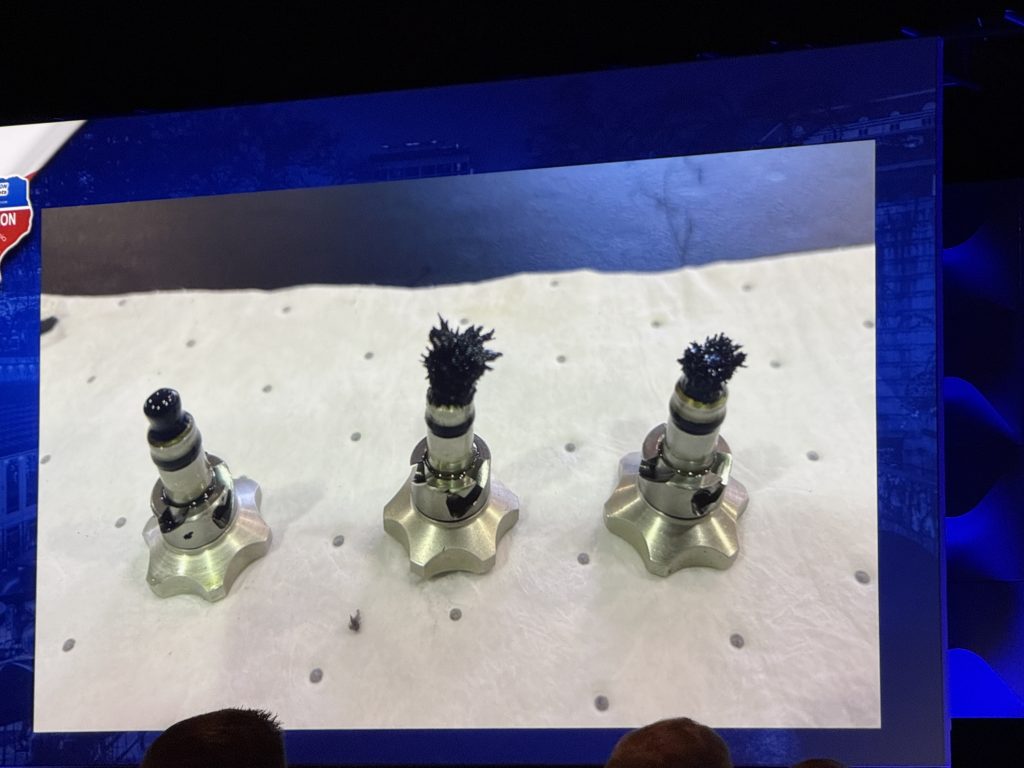
However, pulling the chip detectors soon revealed obvious signs of a catastrophic failure. With a rental engine soon putting the Samuelsons back in the air, the incident served as an example of how to properly handle an emergency – But that isn’t say they didn’t identify room for improvement.
“That was probably the third time I had handled the emergency checklist,” Bonnie said. “When we declared an emergency, Kirk [told me to] get the emergency checklist that was back behind my seat and I found I couldn’t reach it. That’s something we need to practice.” Kirk added that Bonnie now has her own dedicated emergency checklist, front-and-center.
Next, Elop then went through three “stories from the wild” about uncommanded engine rollbacks, two of which involved FJ44 engine rollbacks while descending through FL380 that were determined to be due to fuel delivery unit (FDU) failures.
“If you haven’t heard about this, it’s worth really getting into it. It’s a real thing,” Elop said, adding Williams has released an upgraded component and related service bulletin addressing the issue. “I love the euphemistic approach to describing the purpose of the service bulletin: ‘to install a fuel delivery unit by later design configuration containing improvements to ensure’ – and I quote – ‘a robust engine operation.’ Robust defined as not failing going to flight level three-eight-zero.”
The third incident, this one on a Citation Mustang, happened when an “ice cocoon” formed around the electrically heated T2 probe on the PW615F turbofan. “That leads it to believe that it’s actually overtemped,” Elop said. “When the FADEC detects an overtemp condition, it begins to roll the engine back to shut it down. It’s not a full-on failure, but if you’re at FL410, you’re not going to be there much longer.” A Pratt & Whitney Canada owner bulletin recommends a revised wiring configuration to alleviate the issue.
The last scenario covered in the session was truly terrifying. David Ostrowe came onstage to describe a near-catastrophe shortly after taking off in his Citation M2 with two passengers from Wiley Post Airport (PWD) near Oklahoma City, on the aircraft’s first flight following a trim system inspection.
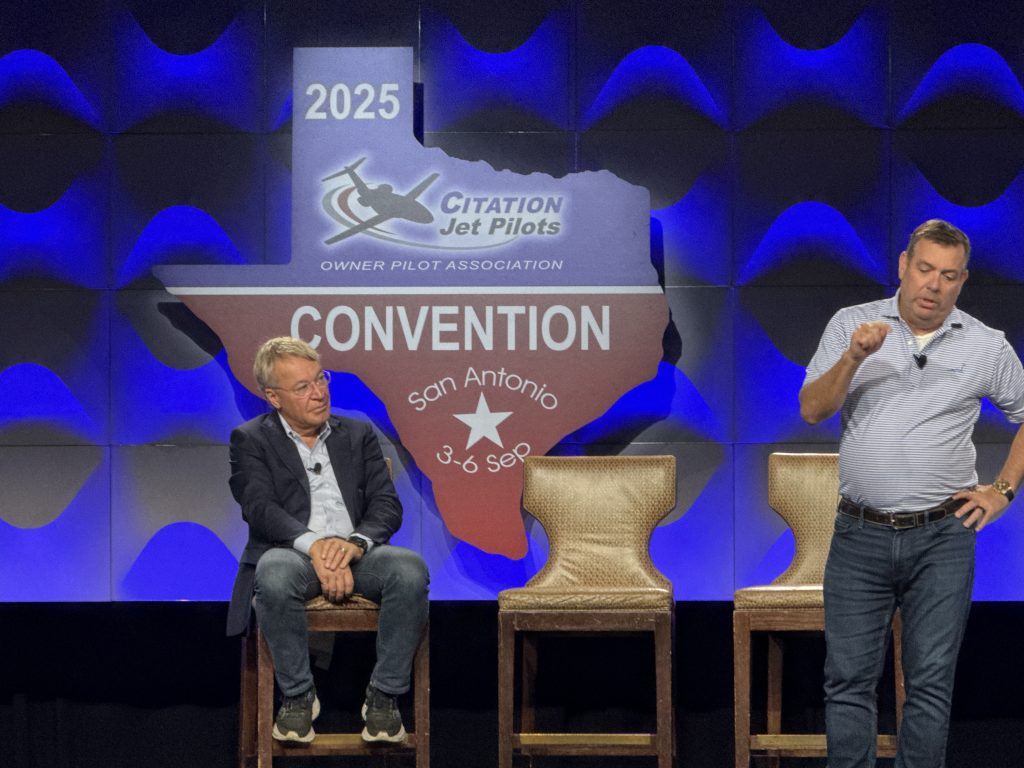
“Literally, the plane takes off prematurely, uncommanded,” he recounted. “It’s bouncy coming off the ground [but] no stall horn, so we’re still within an envelope. Positive rate, flaps up, and the whole time I’m trimming forward with the electric trim. I glanced down, [wondering if] I’d screwed this up. The trim is in the window, and I’m watching the wheel spinning.”
Once the flaps came up, Ostrowe continued, he estimated it took 100 lbs of force on the yoke to keep the nose down. However, a fateful decision unloaded the controls and bought him valuable time to understand what was going on.
“I dropped my right hand and just chopped power, declared an emergency and did a hard right-banked, 50-degree turn at 780 feet AGL,” he said. “That released the [yoke] pressure by about 50 pounds. I was able to get the speed down, get the flaps in and the gear back down.” Ostrowe muscled the aircraft to a successful emergency landing.
Once on the ground, he and the maintenance shop were soon able to determine what had happened. “The kid doing the inspection couldn’t get into the [center] pedestal and he didn’t want to crack it, so he took the trim wheel off” after moving the trim to full nose-up, Ostrowe said. “That disconnected the indicator, the wheel and the motor from the system.”
Once corrected, Ostrowe and his passengers completed their flight to Salt Lake City without further incident. In fact, during the emergency landing, “I even still scored an 85 [on CJP-FOQA℠ criteria],” he joked.